 Add text to get the translation that 22 AI models agree on


How to learn Portuguese: A complete guide
Would you like to learn Portuguese? Whether you are planning a trip to Portugal, exploring opportunities in the Brazilian market (the tenth-largest economy in the world by nominal GDP) or building a career in translation, Portuguese is one of the most rewarding language investments an English speaker can make. It is a Category I language according to the US Foreign Service Institute, achievable to professional working proficiency in 600–750 hours of study, and it opens access to approximately 264 million speakers across five continents.
I have lived and worked in Portugal, and my time there was the single fastest accelerator of my language learning. But before getting to the how, it helps to understand what you are learning.
In this guide:
- About the Portuguese language
- European Portuguese vs. Brazilian Portuguese
- Is Portuguese hard to learn?
- How long does it take to learn Portuguese?
- Is Portuguese easier than Spanish?
- How to teach yourself Portuguese: Practical methods
- The best apps and tools for learning Portuguese
- Why learn Portuguese?
- Frequently asked questions
About the Portuguese language
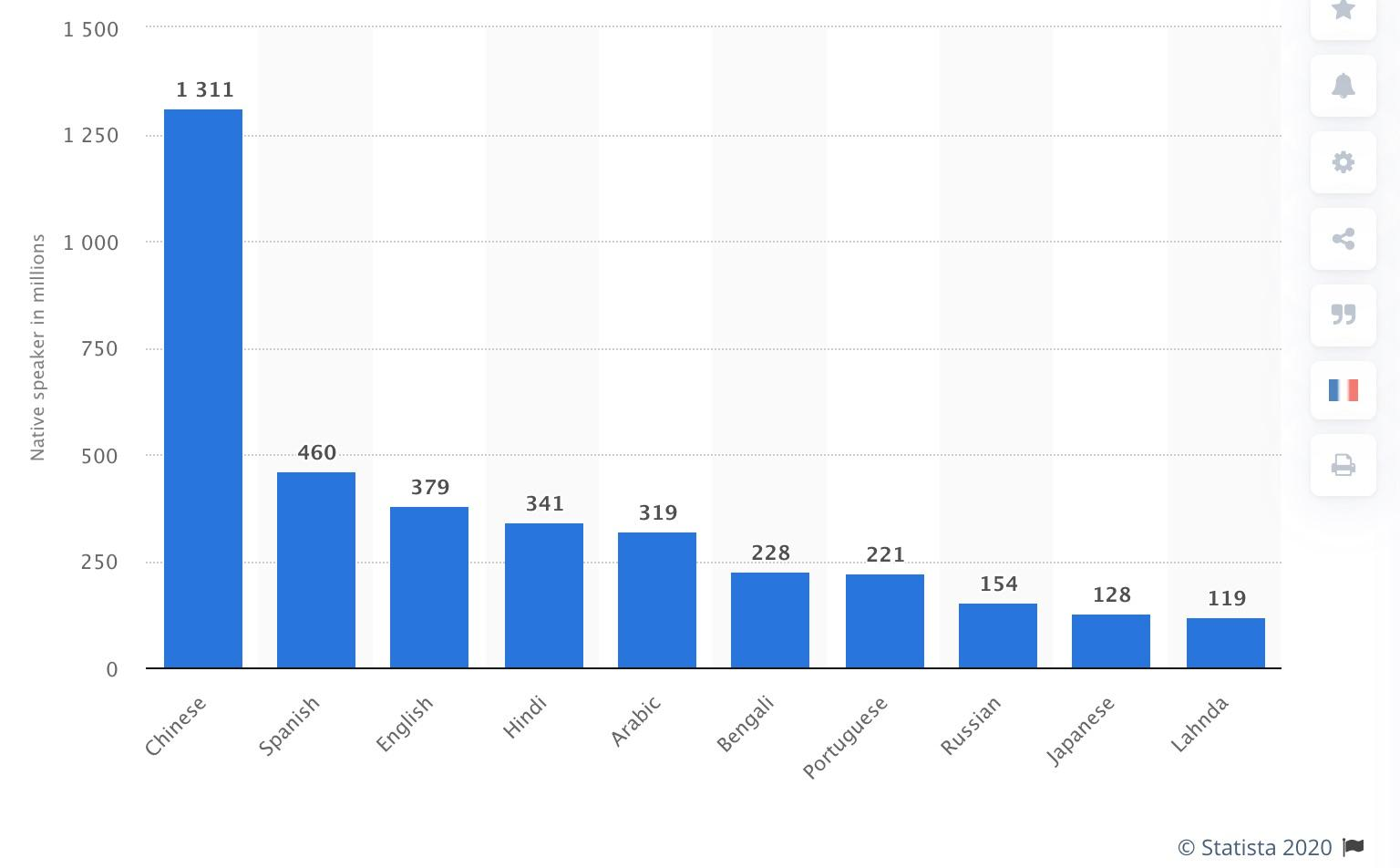
Portuguese ranks as the eighth most spoken language in the world by total speakers, with approximately 264 million speakers, including around 232–236 million native speakers. By native speaker count alone, it ranks sixth globally. It is the official language of nine countries across Europe, South America, Africa, and Asia.
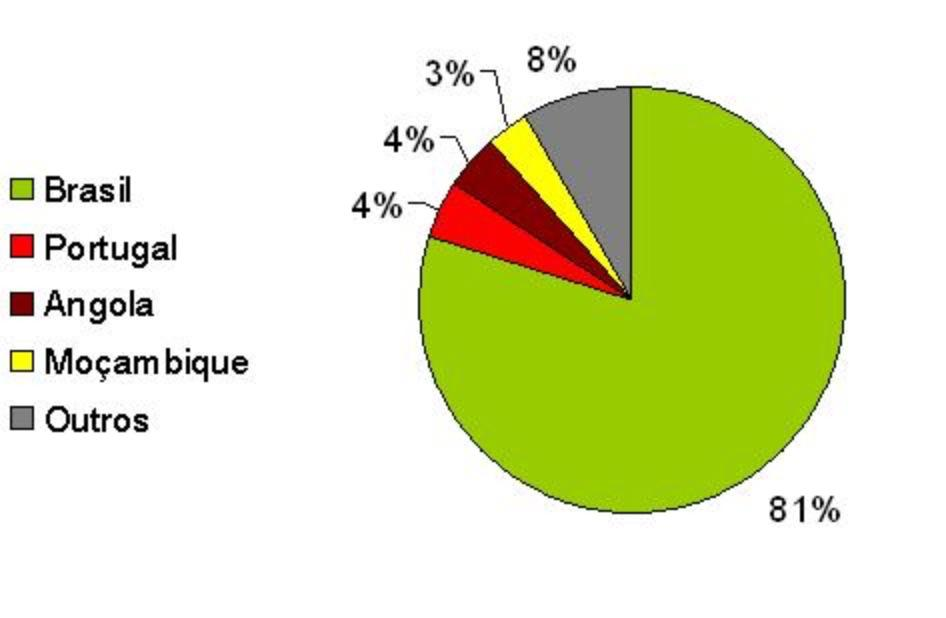
The majority of Portuguese speakers live in Brazil, which accounts for approximately 81% of all Portuguese speakers worldwide. Portugal itself, the birthplace of the language, is home to around 10 million speakers. Angola and Mozambique are also significant Portuguese-speaking nations in sub-Saharan Africa, with Portuguese serving as official language in both countries.
The roots of Portuguese trace back to the Vulgar Latin of Roman soldiers who arrived in the Iberian Peninsula in 216 BCE. The language developed over two millennia, picking up significant Arabic influences during the Moorish occupation of 711 CE — modern Portuguese retains approximately 800 words traceable to Arabic origins. The Portuguese language was officially named and standardized by King Denis of Portugal in 1290 CE, and its geographic expansion through Portuguese colonial trade and settlement from the 15th century onward is what created the global Lusophone community that exists today.
For more on the countries and communities where Portuguese is spoken, see Tomedes' guide to Portuguese-speaking countries and languages spoken in Brazil.
European Portuguese vs. Brazilian Portuguese
Portuguese is the official language of nine countries across four continents, and its geographic spread over centuries has allowed distinctive regional varieties to evolve. The two most significant for learners are European Portuguese and Brazilian Portuguese. Both are mutually intelligible (a speaker of one can communicate with a speaker of the other) but the differences in pronunciation, vocabulary, and grammar are real enough that a learner should know which variety they are targeting.
European Portuguese
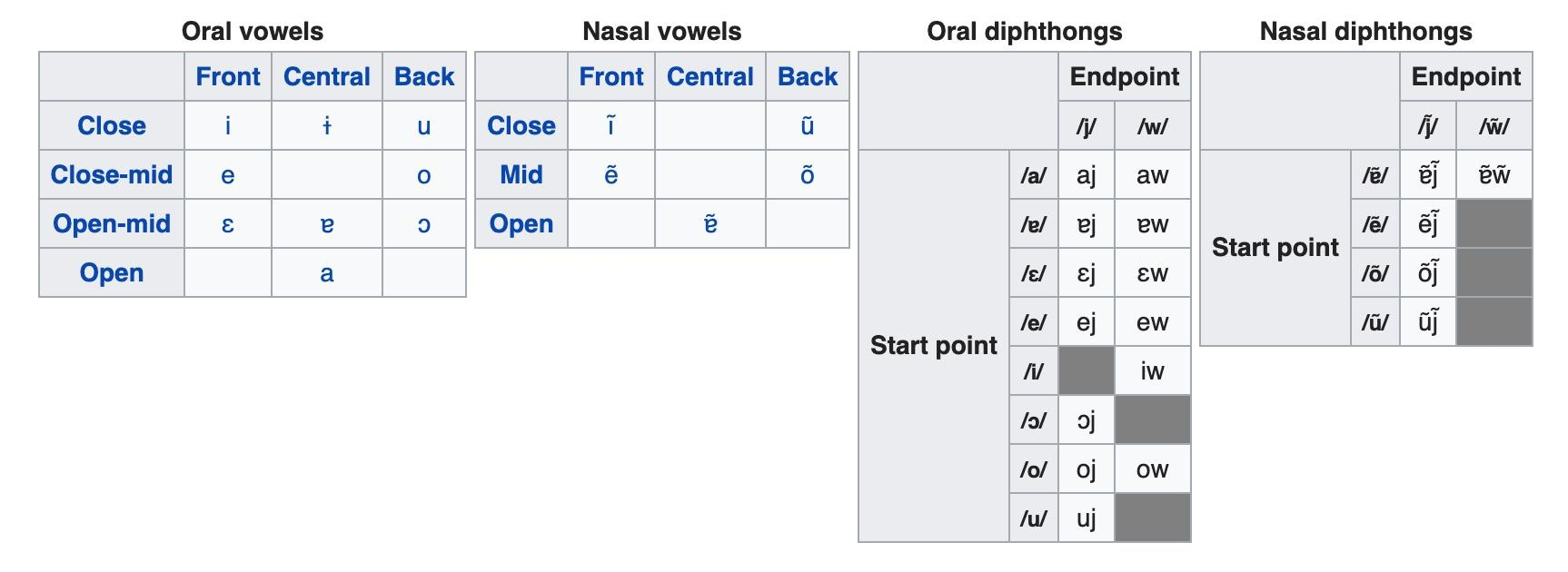
European Portuguese has an instantly recognisable quality that differentiates it from Brazilian Portuguese: the shushing sound. When an S falls at the end of a syllable or word, it becomes a soft "sh" sound. European Portuguese speakers also tend to reduce unstressed vowels significantly (sometimes dropping them almost entirely) giving the language a more clipped, compressed quality compared to Brazilian Portuguese.
Address conventions also differ. In Portugal, polite address uses third-person constructions in ways that can surprise Brazilian or English-speaking learners. Among friends and family, tu is standard. For strangers, elders, or professional contacts, the third-person form (o senhor / a senhora) is typically used.
Brazilian Portuguese
Brazilian Portuguese lacks the shushing quality of European Portuguese and is generally considered more open and vowel-rich in its pronunciation. Where European Portuguese compresses unstressed vowels, Brazilian Portuguese tends to pronounce them more fully, giving the language a more flowing, musical quality to foreign ears.
A fundamental grammatical difference: in Brazil, você is used in both informal and formal contexts — a single pronoun that handles situations where European Portuguese uses tu (informal) and a range of third-person forms (formal). For learners, this simplifies many social interactions. For translators, it is one of the key distinctions that makes Brazilian Portuguese and European Portuguese distinct target varieties.
Text expansion is also worth noting for localization purposes: Brazilian Portuguese averages approximately 30% more text than equivalent English content, with real implications for user interface design, packaging, and marketing materials.
Is Portuguese hard to learn?
No, Portuguese is one of the more accessible languages for English speakers. The US Foreign Service Institute (FSI) classifies Portuguese as a Category I language, meaning it is among the easiest for native English speakers to acquire, alongside French, Spanish, Italian, and Dutch.
Several factors make Portuguese learnable:
Shared Latin roots. English and Portuguese both evolved from Latin. They share approximately 3,000 cognates — words that look or sound similar and share meaning: animal, hospital, important, natural, possible. These give English speakers a running start in vocabulary.
Simpler sentence structure. Portuguese sentence structure is in many respects simpler than English's, particularly for straightforward declarative statements. This makes it realistic to attempt basic Portuguese sentence construction (and basic translation exercises) early in the learning process.
Phonological consistency. Once you learn the pronunciation rules, Portuguese is relatively consistent. The rules are more numerous than Spanish's, but they are rules — once learned, they apply reliably.
The main challenges for English speakers are: nasal vowels (sounds like ão and em that have no English equivalent), verb conjugation (Portuguese verbs change form across six persons, with irregular verbs requiring memorization), and the distinction between ser and estar (two verbs for "to be" used in different contexts).
How long does it take to learn Portuguese?
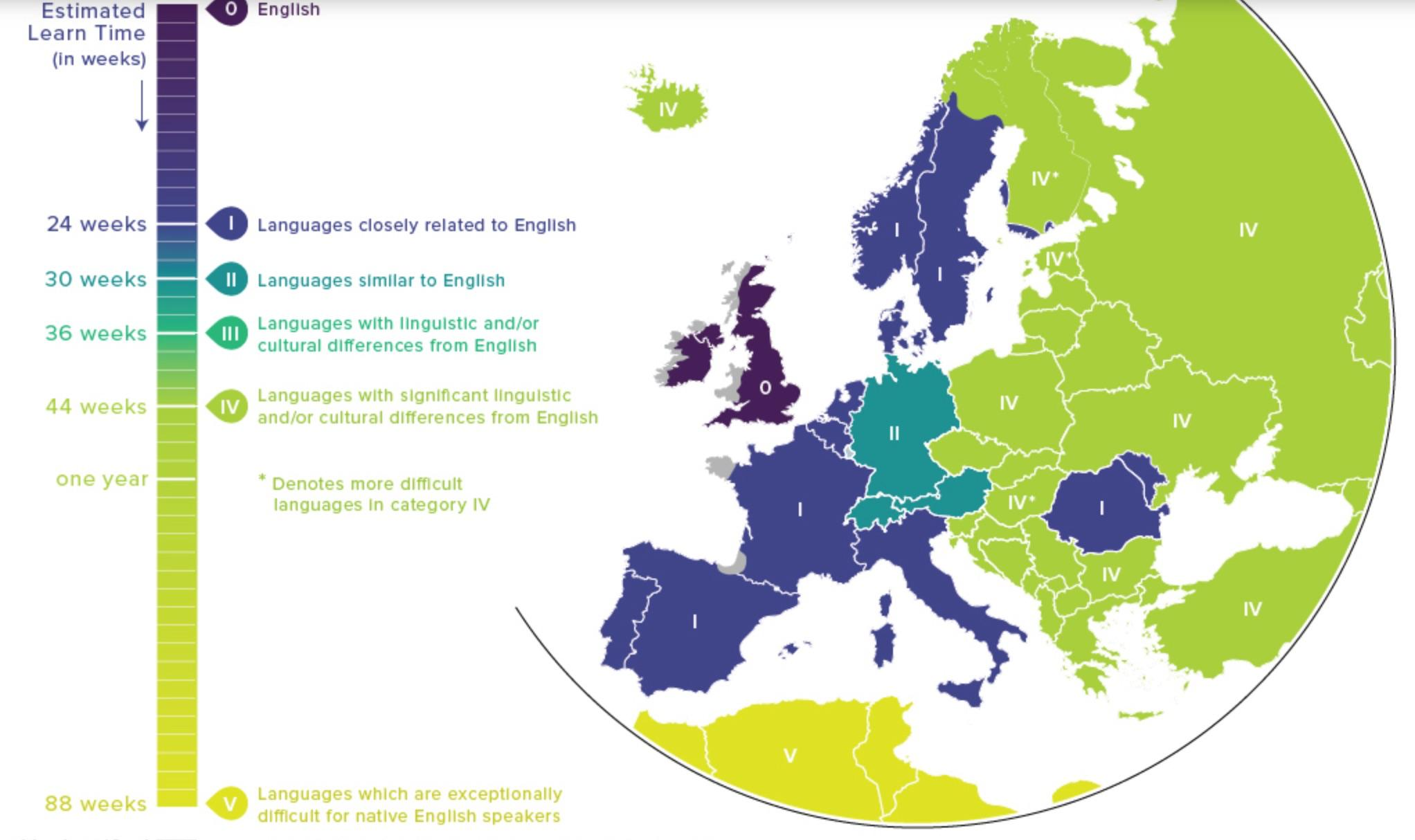
According to the Foreign Service Institute (FSI), Portuguese is a Category I language requiring approximately 600–750 hours of classroom instruction for a native English speaker to reach Professional Working Proficiency (roughly equivalent to B2/C1 on the CEFR scale). This means being able to discuss complex topics in professional settings, read newspapers without a dictionary, and handle most social situations comfortably.
The FSI estimates are based on full-time study with a qualified instructor — approximately 25 classroom hours per week plus 15–17 hours of homework, totalling around 40 hours per week. For learners studying at a more typical pace, the timeline extends:
| Study pace | Estimated time to proficiency |
|---|---|
| 4 hours per week | 3–4 years |
| 1 hour per day (7 hours/week) | 1.5–2 years |
| Full-time intensive (25+ hours/week) | 6–9 months |
If you already speak Spanish, cut those estimates significantly: the FSI notes that a Spanish-to-Portuguese conversion course takes only 14–18 weeks, reflecting how much of the structure transfers. French speakers get a similar advantage.
Is Portuguese easier than Spanish?
For most English speakers, Spanish is marginally easier than Portuguese — primarily because of pronunciation. Spanish spelling is almost perfectly phonetic: you can see a word written and know exactly how to say it. Portuguese is more phonetically complex, with more vowel sounds, more accent marks, and more silent or modified letters.
A personal example: on one of my first visits to Portugal, I attempted to pronounce homens (men) as it appeared on the page: hom-ens. The recipient of my stuttering attempt looked entirely blank. The word is actually pronounced o-mensh, a significant departure from its written form that requires learning the rules before the spelling becomes useful.
Portuguese pronunciation is not difficult once the rules are understood, but there are more rules to learn upfront than there are for Spanish. The FSI rates both languages as approximately 600–750 hours to proficiency, so the practical difference is modest. And if you reach proficiency in Portuguese, you will find Spanish significantly more accessible — the reverse is also true.
For guidance on how to learn Spanish effectively, see Tomedes' guide to learning Spanish.
How to teach yourself Portuguese: practical methods
Start with a native speaker
The most effective early investment in Portuguese learning is access to a native speaker — whether through formal lessons, a language exchange partner, or regular conversation practice. Spoken Portuguese has qualities that no textbook or recording fully captures, particularly the reduced vowels of European Portuguese and the regional intonation patterns of Brazilian Portuguese. Getting the sound in your ears early prevents pronunciation habits that become difficult to correct later.
A native speaker also provides live translation and correction in context: rather than paging through a dictionary when you do not know a word, you can ask immediately and hear the word used correctly in a sentence.
Use varied input sources
Varied input (reading, listening, speaking, and writing) develops different dimensions of language ability. For Portuguese learners, practical resources include:
- Grammar books for structural understanding
- Flashcard systems (physical or digital) for vocabulary
- Brazilian and Portuguese television and film — Brazilian telenovelas are widely available and provide consistent vocabulary exposure in natural conversation
- Podcasts in Portuguese — particularly useful for European Portuguese, where the contracted vowel sounds are harder to pick up through text-based study
- News websites in Portuguese — Portuguese-language editions of major outlets are useful for learners at intermediate level
Using subtitles as a bridge (watching with Portuguese subtitles rather than English ones) accelerates the transition from passive to active reading comprehension.
Total immersion
Nothing accelerates language acquisition like immersion, living in a country where the language is spoken daily. In my own experience, I learned more in my first month living in Portugal than in the months of preparatory study beforehand.
The key to immersion is active engagement rather than passive exposure. Listening intently to conversations in shops, markets, and cafes (noticing how people ask for things, respond to questions, and manage social interactions) provides a direct model of the language as it is actually spoken, not as it appears in textbooks.
The best apps and tools for learning Portuguese
The landscape of language-learning apps has expanded significantly in recent years. For Portuguese learners, several are particularly well-suited:
Duolingo — the most widely used language-learning app globally, offering Brazilian Portuguese as a primary course. Duolingo is strongest for vocabulary building and basic grammar at the beginner level. Its gamified structure supports consistent daily engagement. European Portuguese is also available though the course is less developed than the Brazilian one.
Babbel — offers both Brazilian and European Portuguese courses with a focus on practical conversational skills and grammar explanation. Generally considered more structured and grammatically thorough than Duolingo, and better suited for intermediate learners.
Pimsleur — an audio-first programme that develops listening and speaking skills through spaced repetition of spoken phrases. Particularly strong for pronunciation development and for learners who prefer audio-based learning over screen-based apps.
Anki — a flashcard application using spaced-repetition algorithms that surfaces vocabulary at the optimal moment before forgetting. The most efficient tool for vocabulary retention at scale. Requires more self-discipline than gamified apps but is extremely effective for long-term retention.
Language Transfer — a free audio course in Brazilian Portuguese that teaches grammatical intuition rather than memorization. Widely praised for how quickly it gets learners constructing original sentences.
HelloTalk and Tandem — language exchange apps that connect learners with native speakers for conversation practice. The most practical way to access native speaker interaction without living in a Portuguese-speaking country.
Why learn Portuguese?
Business and professional opportunities
Brazil's economy (currently ranked tenth globally by nominal GDP, with 3.4% growth in 2024) is the largest in Latin America and a major destination for international trade and investment. Portuguese speakers are positioned to access opportunities across Brazil, Portugal, Angola, and Mozambique that are largely inaccessible to English-only professionals.
Translation and language careers
Portuguese is one of the most in-demand languages for professional translation. The distance between Brazilian Portuguese and European Portuguese (different enough to require separate specialist translators) means that the demand is not just for "Portuguese" but for specific variety expertise. Legal, medical, financial, and technical translation into and from Brazilian Portuguese represents a significant and growing segment of the professional translation market.
Cultural access
Portuguese gives direct access to some of the most significant literary traditions of the 20th and 21st centuries: Fernando Pessoa's heteronymous poetry, José Saramago's Nobel Prize-winning novels, Clarice Lispector's experimental fiction, the Lusophone musical traditions of fado and bossa nova, and a body of Brazilian cinema that has produced some of world cinema's most celebrated works.
For anyone seeking professional translation services in Portuguese (whether for Brazilian or European markets), Tomedes provides professional Portuguese translation services with certified human translators specialized by variety and domain, backed by ISO 17100:2015 certification and a 1-Year Quality Guarantee. For a free quote, contact Tomedes.
Frequently asked questions
Q: Is Portuguese easy to learn for English speakers?
A: Yes — the FSI classifies Portuguese as a Category I language, meaning it is among the easiest for native English speakers. English and Portuguese share approximately 3,000 cognates from their shared Latin roots, and Portuguese sentence structure is in many respects simpler than English. Pronunciation requires learning more rules than Spanish, but the rules are consistent once learned.
Q: How many people speak Portuguese worldwide?
A: Approximately 264 million people speak Portuguese worldwide, including around 232–236 million native speakers, according to Ethnologue 2025. This makes it the eighth most spoken language globally by total speakers and sixth by native speakers. Brazil accounts for approximately 81% of all Portuguese speakers.
Q: How long does it take to learn Portuguese?
A: The FSI estimates 600–750 hours of study to reach Professional Working Proficiency in Portuguese for a native English speaker. At a pace of one hour per day, this equates to approximately 1.5–2 years. At a typical four hours per week, approximately 3–4 years. Full-time intensive study compresses the timeline to 6–9 months.
Q: What is the difference between Brazilian and European Portuguese?
A: The main differences are pronunciation (European Portuguese reduces unstressed vowels significantly and has a "shushing" sh sound; Brazilian Portuguese is more vowel-full and open), address conventions (você is universal in Brazil; European Portuguese uses a range of forms), and some vocabulary differences. For translation purposes, Brazilian and European Portuguese are treated as distinct target varieties requiring separate specialist translators.
Q: Should I learn Brazilian or European Portuguese?
A: It depends on your goals. If your focus is Brazil (business, travel, or literary culture), learn Brazilian Portuguese. If your focus is Portugal, Angola, Mozambique, or other Lusophone African countries, European Portuguese is the appropriate target. The two varieties are mutually intelligible, so learning one gives partial access to the other — but for professional or cultural purposes, specificity matters.
Q: Is Portuguese or Spanish easier to learn?
A: Spanish is marginally easier for most English speakers, primarily because of phonetic spelling — you can see a Spanish word written and know how to pronounce it. Portuguese has more pronunciation rules and more vowel sounds to learn. Both are Category I FSI languages requiring approximately 600–750 hours to proficiency. If you already speak one, the other becomes significantly more accessible.
By Ofer Tirosh
Connect on LinkedInOfer Tirosh is the founder and CEO of Tomedes, a language technology and translation company that supports business growth through a range of innovative localization strategies. He has been helping companies reach their global goals since 2007.
Share:

Post your Comment